How to Maximize Performance with Polarization Maintaining Filter Couplers

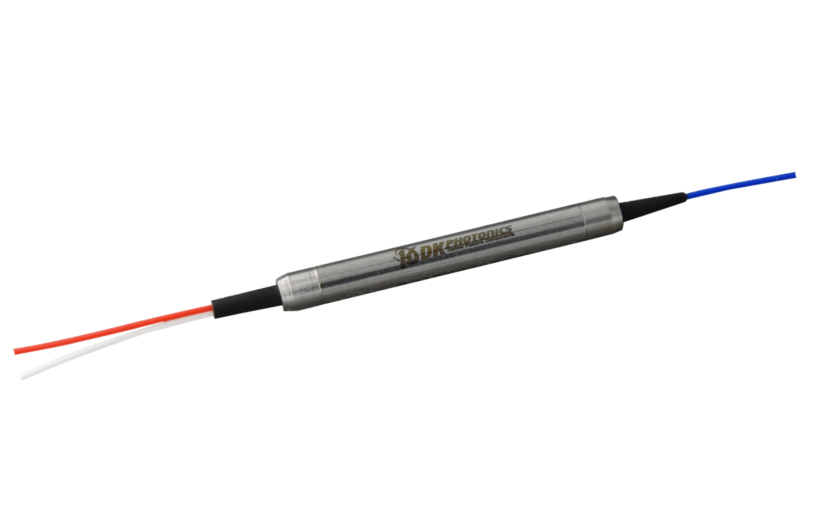
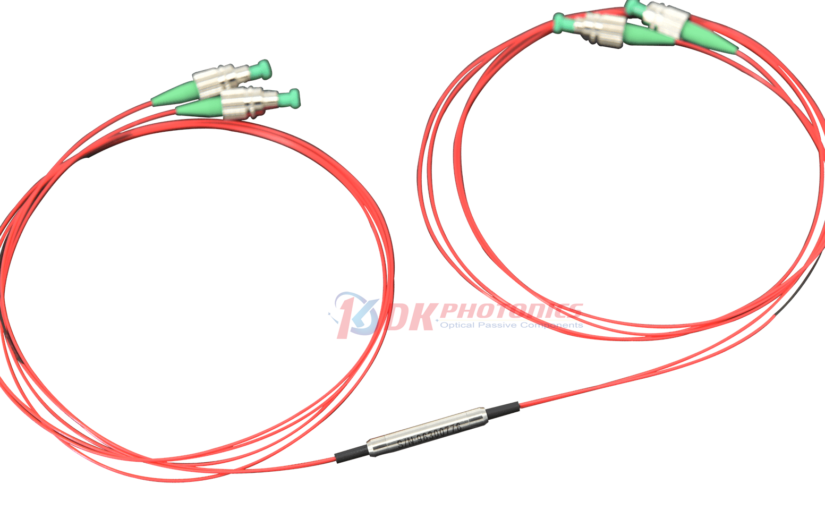
In the world of fiber optic communications, maintaining the polarization of light signals is important for ensuring reliable data transmission and efficient signal processing. This is where Polarization Maintaining Filter Couplers (PMFCs) play a pivotal role.

Due to their ability to maintain light’s polarization state, these specialized optical components offer improved stability and performance in a range of photonic applications.

Understanding Polarization Maintenance

The term “polarization” describes how an electric field is oriented within a light wave. In a fiber optic system, the polarization of the light can easily become scrambled or distorted due to various environmental factors, such as bending, twisting, or temperature fluctuations. This polarization instability can lead to signal degradation, reduced efficiency, and even data loss.

Polarization Maintaining Filter Couplers are engineered to mitigate these challenges by maintaining the polarization state of the light as it travels through the optical system. PMFCs maximize the overall performance of the fiber optic network by maintaining the polarization, which guarantees that the light propagates in a consistent and predictable manner.

Key Factors for Maximizing PMFC Performance

To maximize the performance and stability of Polarization Maintaining Filter Couplers, there are several important factors to consider:

Precise Alignment

Proper alignment of the PMFC is crucial for ensuring optimal polarization maintenance. The input and output fibers must be precisely aligned to ensure that the light beam is coupled efficiently, without introducing any unwanted polarization changes.

Careful Design and Construction

The internal structure and materials used in the PMFC design play a significant role in its ability to maintain polarization. Manufacturers must carefully engineer the coupler’s components, such as the waveguide and coupling region, to minimize polarization-induced losses and maintain a stable polarization state.

Environmental Stability

Polarization Maintaining Filter Couplers must be able to withstand various environmental conditions, such as temperature fluctuations, mechanical stress, and vibrations, without compromising their performance. Robust construction and the use of materials with low thermal expansion coefficients can help ensure the PMFC’s stability under varying environmental conditions.

Wavelength Dependence

The performance of a PMFC can be influenced by the wavelength of the light being transmitted. Manufacturers often design PMFCs to operate optimally within a specific wavelength range, ensuring consistent polarization maintenance across the desired spectrum.

Careful Handling and Installation

Even the most well-designed Polarization Maintaining Filter Coupler can experience performance degradation if it is not handled and installed properly. Careful attention must be paid to minimizing mechanical stress, avoiding contamination, and ensuring secure mounting to maintain the coupler’s polarization-preserving capabilities.

By addressing these key factors, users can maximize the performance and stability of Polarization Maintaining Filter Couplers in their fiber optic systems.

Furthermore, advancements in PMFC design, manufacturing, and testing techniques continue to push the boundaries of what these optical components can achieve. As the demand for high-performance, polarization-sensitive photonic devices grows, the importance of Polarization Maintaining Filter Couplers  will only continue to increase.
How Polarization Maintaining Filter Couplers Improve Signal Quality

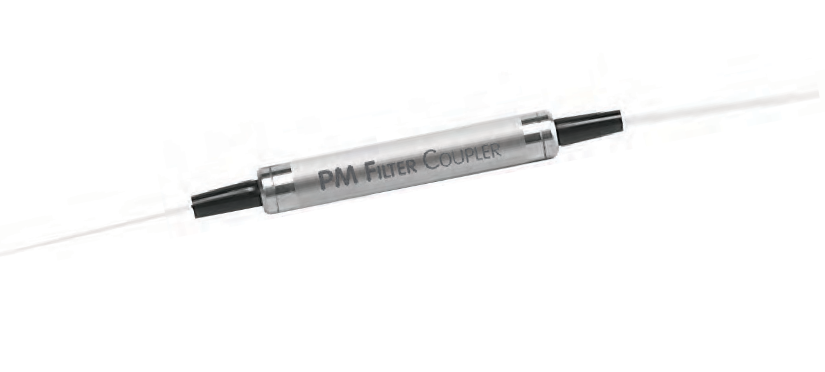
In our increasingly connected world, the ability to reliably transmit high-fidelity data is more critical than ever. The backbone of modern telecommunications and fiber optic networks relies on pristine signal quality to function optimally. This is where innovative components like Polarization Maintaining Filter Couplers come into play. 

By precisely controlling the polarization of light, these devices ensure consistent and error-free data transmission across global communication networks. 

Introducing Polarization Maintaining Filter Couplers 

Polarization effects have long been the bane of optical engineers, introducing distortions that degrade signal integrity. Polarization Maintaining Filter Couplers overcome this by using specialized fibers and advanced filtering techniques to maintain consistent polarization alignment as light propagates through the system. The resulting enhancement in signal quality and stability unlocks the true potential of modern high-speed fiber optic networks. 

How Polarization Maintaining Filter Couplers Work 

The inner workings of Polarization Maintaining Filter Couplers leverage the polarization sensitivity of light. As an electromagnetic wave, light consists of oscillating electric and magnetic fields. The orientation of these fields defines the polarization state. Within optical fibers, factors like stress, bending, and temperature changes can randomly alter polarization, scattering the signal. Polarization Maintaining Filter Couplers counteract this by coupling light selectively based on the polarization state. 

This enables precise separation and processing of optical signals in systems like dense wavelength division multiplexing (DWDM), a key technology for expanding telecom network capacity. By assigning separate wavelengths to distinct polarization channels, vastly more information can be transmitted through a single fiber optic cable. Polarization Maintaining Filter Couplers is crucial to extract and process each polarized wavelength channel independently. 

Enhancement to Signal Integrity 

As optical technologies progress, the underlying need for pristine signal quality persists. Polarization Maintaining Filter Couplers answer this need with an elegant solution that leverages the very nature of light itself. Their unique ability to manipulate polarization states establishes them as an enabling technology across a diverse range of fields. 

Applications across Industries 

The telecommunications industry relies extensively on such polarization-splitting components. But the applications extend much further. Any field that utilizes laser systems can benefit from the signal-enhancing capabilities of Polarization Maintaining Filter Couplers. From medical devices to industrial manufacturing, they optimize laser performance by ensuring a stable polarized output, free from disruptive polarization fluctuations. 

Scientific research involving lasers also demands the precision that polarization-maintaining couplers offer. Applications like laser interferometry, nonlinear optics, and quantum computing often require intricate polarization control to conduct cutting-edge experiments. By stabilizing inherent polarization variability, these couplers enable groundbreaking research. 

From powering global digital infrastructure to pushing the frontiers of scientific research, Polarization Maintaining Filter Couplers are indispensable components for the modern photonics engineer’s toolkit. Their capacity to enhance signal integrity empowers the realization of systems and applications limited only by imagination. 

Overcoming Challenges with PM Filter WDM Deployment

Fiber optic networks represent the backbone of modern communication infrastructure. By encoding data into light, fiber optic cables can transmit vast amounts of information at blistering speeds. 

At the core of high-capacity fiber optic networks lies a technology called wavelength division multiplexing (WDM). WDM allows multiple data signals to be transmitted over the same optical fiber by using different wavelengths or colors of light. 

An advanced form of WDM called polarization multiplexed (PM) filter WDM pushes the boundaries even further by combining wavelength division multiplexing with polarization multiplexing. This combination provides extraordinary capacity and efficiency gains that are critical for supporting the exponential growth in data traffic. However, these advantages come with a unique set of deployment challenges that must be addressed. 

Polarization Sensitivity  

The most fundamental issue is polarization sensitivity. PM filter WDM relies on maintaining the polarization of light waves as they pass through the network. Unfortunately, fluctuations in temperature, mechanical stress, and other factors can cause the polarization to drift. 

Without proper control, signal quality degrades leading to increased data errors. Manufacturers utilize special fibers and electronics that help maintain polarization integrity. However, additional adjustments may be needed when installing system components to ensure proper alignment and operation. 

Channel Crosstalk 

Another major concern is the crosstalk between closely spaced wavelength channels. The optical filters that separate the wavelengths are not perfect. A small amount of signal from one channel can leak into another which distorts the original data. 

Some standards establish maximum acceptable levels of crosstalk in PM filter WDM systems. Engineers must carefully select filters and optimize channel spacing configurations that mitigate crosstalk during deployment. 

Dispersion Management 

Dispersion also poses issues for PM filter WDM networks. As light propagates through the glass fiber core, wavelengths spread out slightly. This causes pulses to broaden which makes it harder to distinguish data bits at the receiving end. 

Moderate dispersion levels can be compensated by using dispersion-compensating modules. However, higher dispersion may require installing specialty fibers with ultra-low dispersion properties. 

Signal Loss 

Deployment teams also have to minimize optical signal loss and attenuation. Microscopic impurities in the glass as well as subtle fiber faults absorb a tiny fraction of the light energy as it travels through the cable. 

Connectors, splices, and other components also contribute additional loss. Careful routing, splicing, and inline amplification help overcome signal loss and extend PM filter WDM transmission reach. 

Scalability and Upgradability 

Upgradability and scalability have to be factored in when architecting PM filter WDM systems. Demand for bandwidth grows relentlessly as new applications emerge. 

Deployed infrastructure should be designed with open interfaces and extra capacity to simplify adding new wavelengths, transmission gear, and inline amplification down the road. 

PM filter WDM offers groundbreaking capacity for fiber optic networks. However, successfully harnessing its potential requires extensive expertise in optical engineering and network planning. From tackling polarization sensitivity to minimizing signal impairments, the deployment process is filled with challenges. However, by leveraging the latest technical innovations and design principles, these hurdles can be overcome.