Significance of Using the Right Polarization Maintaining Fiber

Fused Coupler is a type of optical fiber that is used to split high power single line polarized light into multiple directions without disturbing the line at the state of polarization. This fiber is also used as a power tap to monitor signal power in a PM fiber system. A fused coupler is widely used in PM fiber interferometers, power sharing in polarization sensitive systems, and signal monitoring in PM fiber systems.
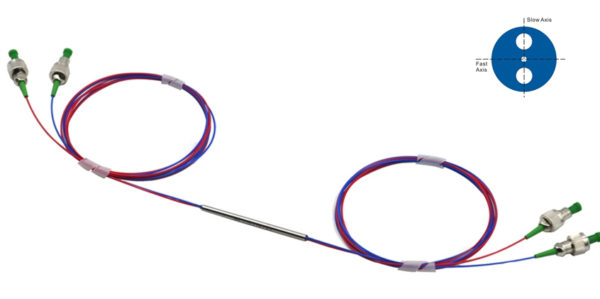
Couplers are generally divided into two categories- passive couplers and active couplers. The passive couplers are able to redistribute the optical signal without making optical to electrical conversion while active couplers electric devices used to split or combine signals electrically using a device called fiber optic detector and sources for input and output.

Based on applications, the couple has different types. So to make sure you choose the right coupler, it is crucial to know about them.  Here, we will shed light on some of the most important ones that are widely used today.

T coupler

Also, called Y coupler, it is a three port device and mainly used for power monitoring. It is also used for splitting the power input into two equal outputs.

Tree coupler

Its main work is to split the single input into multiple outputs. It is used as a combiner to combine multiple output signals.

Star coupler

It is pretty well different from the first two. Unlike them, this coupler has multiple inputs and multiple outputs. The fibers radiate from the central point likes a star. And this is why it is called star coupler.

Wavelength selection coupler

Also known as WDM (wavelength division multiplexer, wavelength selection coupler splits the signal based, not on power.

Having a look at the types of couplers and their applications, it is quite clear that each of them has a different application. And so they perform well in a particular situation and meet a particular need. If you are looking a coupler, it is very important to choose the one that best meets your needs.

 And the best way to know which one will work best for you are looking at your needs. Yes, first of all, you should figure out your requirements. This will make it easy for you to come out with the right option without wasting your time.

Features of top couplers for polarization-maintaining

 In addition to the types of a coupler, the features of coupler also play a vital role in selecting. Here are some of the top features that you must consider when looking for the one for you. A quality fused coupler has:

Low insertion loss
• High extinction ratio
• Compact In-Line Package
• Available for Slow or Fast Axis Operation
• High Stability and Reliability

Whether you are looking for couplers for the use of Fiber Optic Instruments, Fiber Amplifiers, Fiber Sensors, or Coherent Detecting devices, choose the one, keeping in mind the above features. Also, make sure to buy only from top suppliers of Polarization Maintaining Fused Couplers in China.
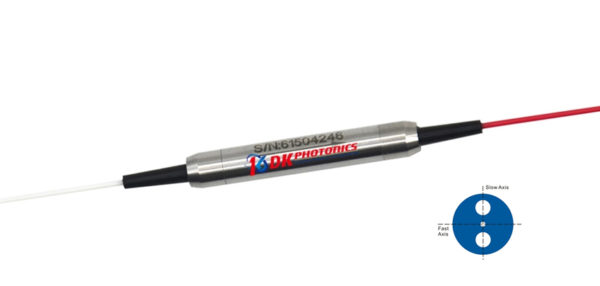
In-Line Polarizer – Top Class Widely Used Polarization Maintaining Component

Polarization management is of crucial importance in the designation of communication systems and circuits. In most cases, a fiber optic with single polarization is thought to be a good choice. The value of extinction ration along with the amount of loss of one polarization plays a vital role in fixing the merit of these methods.  Here we will discuss in detail the significance of in-line polarizer and other related aspects that make a good sense in choosing the right polarization management component.

What is in-line polarizer?

It is a kind of optic fiber component used to covert un-polarized light into polarized light using a high-extension ratio. The component is designed to pass the light with one particular polarization while preventing the other polarization. In-line polarizer provides low loss, high extension ration, and high return loss.

Also known as fiber cables, the in-line polarizer opens up new avenues for the design of modular devices and small yet sufficient set-up for industrial as well as scientific applications. Single mode fibers are designed for the use in complex and self-obtained setups. They significantly increase the laser safety by reducing laser safety classification. The best thing about such component for polarization management is that it allows for the use of a sensitive and measurement system that makes the use of the benefit of a laser beam along with the desirable features of the polarization state and coherence. But for that, it needs to be separated from the laser source and the measurement and the laser source are decoupled mechanically and thermally as to avoid any negative impacts.

The significance of in-line polarizer and key features

As the in-line polarizer is designed to pass light with one specific polarization while blocking the others and can be used to covert no polarized light into polarized light with high extinction ratio, it has a very crucial importance in the designation of communication systems and circuits as well as other instrumentation applications.

The best thing about this component is that it allows for customization. So if you do not find the one that meets your needs, you can get the one customized according to your requirements.  Names like DK Phonics offer customization of the in-line polarizer and the features can be added according to your needs. However, here are some top features that are default with every polarizer.

  • Low insertion loss
  • High power handling
  • High extinction ratio
  • Low cost
  • High reliability

In addition, you can add one or more features per your need. Given its cutting-edge features, the component is highly suitable for the use in applications which include fiber amplifier, fiber lasers, fiber sensors, test & measurement, and communication systems. However, it is advisable that you trust a reputed supplier who has been providing quality products for a long time when you need such a component and it also is better not to choose a 250μm bare fiber pigtail as that gets your less result as compared with the in-line polarizer.