Market Forecast–MPO Connectors in 40/100GbE – DK Photonics

MPO fiber optic connectors used in North American 40/100GbE communication links are forecast to increase at a rate of 49.8% per year through 2018…
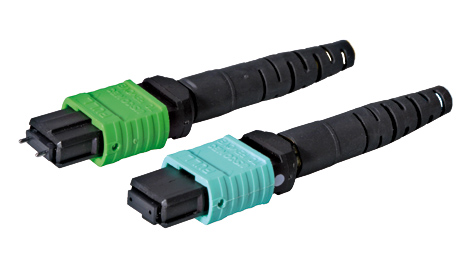
MPO

Aptos, CA (USA) – August 20, 2014 —ElectroniCast Consultants, a leading market & technology forecast consultancy addressing the fiber optics communications industry, today announced the release of their market forecast and analysis of the use of MPO fiber optic connectors in 40 gigabit Ethernet (GbE) and 100GbE Standard communication network links.  MPO is the industry acronym for “multi-fiber push on.”

“Applications such as video, virtualization, cloud computing, switching/routing and convergence are driving the need for bandwidth expansion in data centers, 4G/LTE (wireless) networks, and other deployments.  We continue on the path of gradually migrating from 1G to 10G to 40G and 100G and eventually beyond; and the MPO connector is a key component in 40/100GbE network links, ” said Stephen Montgomery, director of the fiber optics components group at ElectroniCast.

The use of MPO fiber optic connectors in North American 40GbE and 100GbE networks is expected to reach $28 million in 2014, an increase of 84% over last year (2013). The use of 40/100GbE MPO connectors in North American is forecast to increase at annual rate of 49.8% per year over the 2013-20189 timeframe covered in the ElectroniCast market forecast. Market forecast data in the market study refers to consumption (use) for a particular calendar year; therefore, this data is not cumulative data.

The market forecast is segment by the use of single-mode and multimode 12-fiber and 24-fiber MPO connectors, and further broken-out by the use of connectors in 40G and the connectors used in 100G.

According to the market study, the North American 40/100GbE MPO connector market expansion will be dominated by the 12-fiber multimode MPO connectors, increasing at an average annual growth rate of 48.5 percent during the forecast period.

DK Photonicswww.dkphotonics.com  specializes in designing and manufacturing of high quality optical passive components mainly for telecommunication, fiber sensor and fiber laser applications,such as PLC Splitter, WDM, FWDM, CWDM, DWDM, OADM,Optical Circulator, Isolator, PM Circulator, PM Isolator, Fused Coupler, Fused WDM, Collimator, Optical Switch and Polarization Maintaining Components, Pump Combiner, High power isolator, Patch Cord and all kinds of connectors.
Ovum: Optical components market to grow 8% in 2014 from $6.8 bn in 2013

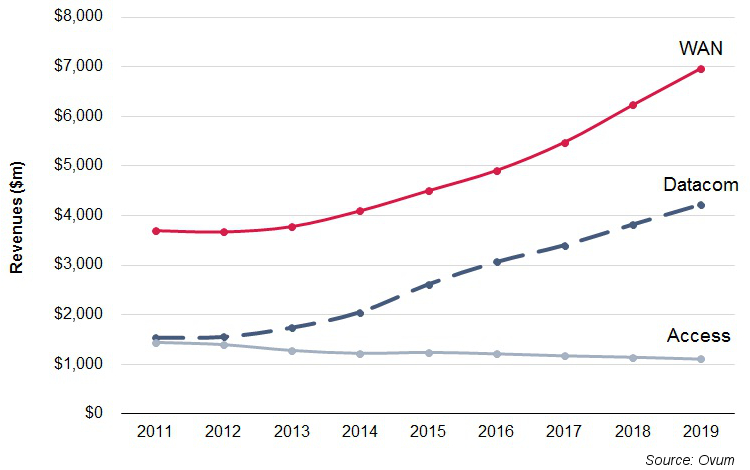
The global optical components (OC) market is expected to grow 8 percent in 2014 from $6.8 billion in 2013, said Ovum.

In 2013, the OC market increased 3 percent from 2012. Ovum said main growth drivers in 2013 were data communication sales driven by large data centers, 100G coherent demand, and unexpected growth in sales of transceivers for fiber-to-the-antenna applications for 4G build-outs.

“Demand for 100G metro–optimized transmission gear will begin shipments and ramp in 2015. Multiple component vendors introduced components and pluggable optics for 100GHz DWDM in anticipation. Opportunities are also emerging in the data center for high-speed interconnects,” said Daryl Inniss, practice leader for Telecoms Components at Ovum.

In the first quarter of 2014, the optical components market declined 1 percent sequentially and grew 7 percent compared to the year-ago period.  New lower telecom prices were one of the main reasons for the marginal growth in OC on quarter-on-quarter basis.

Ovm said demand for 100G components for coherent transmission in WAN, datacom transceivers at 10 and 40G, and fiber-to-the-antenna transceivers is expected to continue. Traffic continues to increase, and high-speed optics being used in new applications are helping to drive the market forward.

Global-optical-components-market-forecast

The WAN OC segment, which includes components in telecom carriers’ core and metro networks, the largest segment, will grow at a compound annual growth rate (CAGR) of 11 percent to $7 billion in 2019. Demand for 100G components and modules is a big driver for growth in WAN.  Ovum expects strong demand for pluggable coherent transceivers in 2015.

Datacom will be expanding at a 16 percent CAGR to reach $4.2 billion in 2019 — led by demand for 10 and 40G components in the early years and then 100G in the later years driven by the availability of server ports supporting data rates greater than 10G.

Access — including CATV, FTTx and transceivers for the fiber-to-the-antenna application — will decline at 2 percent CAGR to $1.1 billion in 2019. The decline will be driven by the FTTx application, where volumes are nearly constant through the forecast period but price declines are projected to pull down revenues.


DK Photonicswww.dkphotonics.com  specializes in designing and manufacturing of high quality optical passive components mainly for telecommunication, fiber sensor and fiber laser applications,such as PLC Splitter, WDM, FWDM, CWDM, DWDM, OADM,Optical Circulator, Isolator, PM Circulator, PM Isolator, Fused Coupler, Fused WDM, Collimator, Optical Switch and Polarization Maintaining Components, Pump Combiner, High power isolator, Patch Cord and all kinds of connectors.
Huawei, Rostelecom collaborate on FTTH distribution boxes—DK Photonics

Huawei says it has collaborated with Russian service provider Rostelecom to develop floor distribution boxes (FDBs) for use in Rostelecom’s flexible fiber to the home (FTTH) deployments. The FDBs will help improve the efficiency of the operator’s FTTH deployments, particularly in sparsely populated areas, Huawei says.

Rostelecom is under a mandate from the Russian government to connect 13 million CWDM Module users by 2015, Huawei says. This task is complicated by the fact that much of the operator’s footprint covers rural areas.

To improve deployment efficiency, Huawei says it recommended what it calls “the thin-covered network deployment model.” According to the model, fiber-optic networks are constructed to user access points and the FDBs, the latter of which are used as the interface between the outside plant and the inside plant. As the network expands and more users are connected, pre-made drop cables can be used for plug-and-play, quick service provisioning.

The customized FDBs were designed for success-based deployment. Rostelecom can deploy FDBs that provide access to a single user, then add connections as many as four or eight users as take rates improve. Technicians can complete the expansion in one minute without the use of tools, Huawei says.

Huawei and Rostelecom will further collaborate on other network elements, including the closure, optical splitter, and fiber distribution terminal (FDT), the technology provider added.

For more information on FTTx products, visit the DK Photonics Website.

DK Photonicswww.dkphotonics.com  specializes in designing and manufacturing of high quality optical passive components mainly for telecommunication, fiber sensor and fiber laser applications,such as PLC Splitter, WDM, FWDM, CWDM, DWDM, OADM,Optical Circulator, Isolator, PM Circulator, PM Isolator, Fused Coupler, Fused WDM, Collimator, Optical Switch and Polarization Maintaining Components, Pump Combiner, High power isolator, Patch Cord and all kinds of connectors.
Fiber Optic Collimator Lens Assembly Global Market Forecast-DK Photonics

Fiber optic collimator lens arrays are forecast with strong value-based growth rates of more than 45% per year (2013-2018)…

Aptos, CA (USA) – May 9, 2014 —ElectroniCast Consultants, a leading market research & technology forecast consultancy addressing the fiber optics communications industry, today announced the release of a new market forecastof the global market consumption and technology trends ofcommercial (non-military) fiber optic collimating lens assemblies, which are used in optical communication applications.

The market study covers single lens assemblies, 2-12 lens arrays, and arrays with more than 12 lenses. Both of the lens array categories are forecast with strong growth rates of more than 45% per year (2013-2018).  Single lens fiber optic collimator assemblies hold the global market share lead in the selected optical communication applications covered in the ElectroniCast study.

“Collimator lenses (and lens assemblies) are used in a variety of photonic products; however this market study forecasts the use of micro-sized collimator lens assemblies, which are used specifically in optical communication components/devices. Fiber optic collimator lens assemblies serve as a key indicator of the growth of the fiber optic communication component industry,” said Stephen Montgomery, Director of the Fiber Optic Component group at the California-based consultancy.

ElectroniCast defines lens assemblies as lenses (one or more), which are attached to an optical fiber or fitted/attached into (or on) a planar waveguide/array substrates or other device(s) for the purpose of collimating light for optical fiber communication.

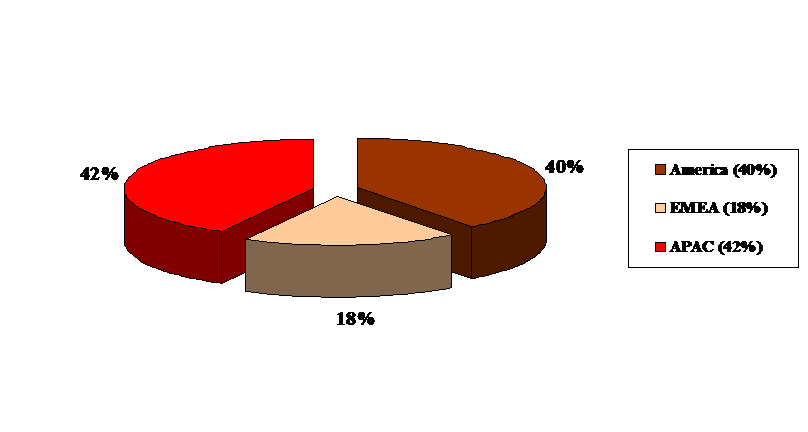
The global consumption of fiber optic collimator lens assemblies, which are used in commercial optical communication applications, reached $264.2 million last year in 2013 and is forecast to reach $298.4 million this year (2014), an increase of 12.9%.    The American and APAC regions are forecast to remain relatively close together in relative consumption value market share.  The Europe, Middle East and Africa regional segment (EMEA) is forecast with the fastest average annual growth rate during the forecast period.  Market forecast data in the ElectroniCast report refers to consumption (use) for a particular calendar year; therefore, this data is not cumulative data.

Fiber optic collimator lens assemblies are widely used to covert a divergent output laser beam from a fiber or waveguide into an expanding beam of parallel light; therefore, they are used in a variety of optical communication components, such as: modulators, attenuators, transmitters, pump laser modules, switches/optical cross connects, wavelength selective switches, ROADMs, isolators, circulators, expanded-beam connector assemblies, optical filter modules, DWDM, tunable filters, optical sensors, optical signal processing, integrated/hybrid packaged modules, and other active and passive components and devices.

The Asia Pacific region is currently the leader in consumption value of the fiber optic collimator lens assembly market …

Fiber Optic Collimator Lens Assemblies

Global Market Share (%), By Region (Value Basis, Estimate – 2014)

Fiber Optic Collimator

DK Photonicswww.dkphotonics.com  specializes in designing and manufacturing of high quality optical passive components mainly for telecommunication, fiber sensor and fiber laser applications,such as WDM, FWDM, CWDM, DWDM, OADM,Optical Circulator, Isolator, PM Circulator, PM Isolator, Fused Coupler, Fused WDM, Collimator, Optical Switch and Polarization Maintaining Components, Pump Combiner, High power isolator, Patch Cord and all kinds of connectors.
Optical Isolators Global Market Forecast-DK Photonics

According to ElectroniCast, optical isolator value in Telecommunications is forecast to increase 19.6% this year…

Aptos, California (USA) – April 29, 2014  —ElectroniCast Consultants, a leading market research & technology forecast consultancy addressing the fiber optics communications industry, today announced the release of a new market forecastof the global consumption of optical isolators in optical communication and specialty applications.

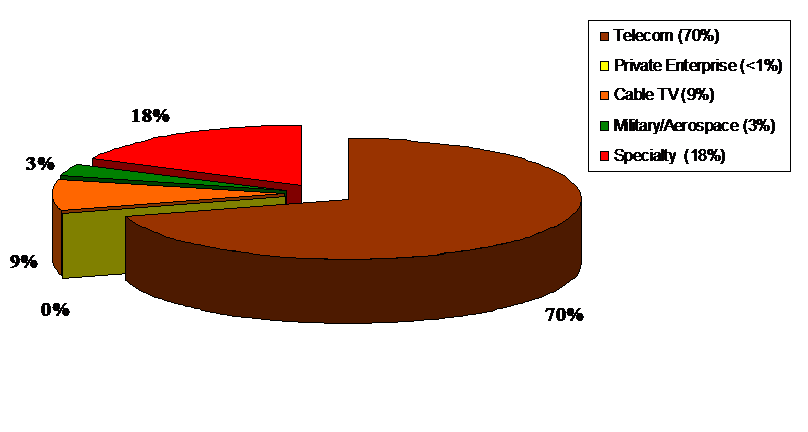
According to ElectroniCast, the worldwide optical isolator consumption was led by Telecommunication applications in 2013 with a 70 percent market share or $349.7 million, and is forecasted to increase 19.6 percent in value to $418.2 million this year (2014).  Market forecast data in this study report refers to consumption (use) for a particular calendar year; therefore, this data is not cumulative data.

Optical isolators are devices that allow light to be transmitted in only one direction. They are most often used to prevent any light from reflecting back down the optical fiber, as this light would enter the source and cause backscattering and feedback problems. This is especially important for high data rate transceivers and transponders, or those devices requiring long span lengths between transceiver pairs. Optical feedback degrades signal-to-noise ratio and consequently bit-error rate.

“Continuing demand for upgrading communication networks to accommodate rapidly increasing bandwidth requirements will drive the steady consumption of optical fiber links. Optical isolators are used in with high-speed transmitters that are required to transmit longer distances and/or multiple wavelength transmitters,” stated Stephen Montgomery, Director of the Fiber Optics Components group at ElectroniCast Consultants.

Optical isolators are not widely used in Private Enterprise applications; however, worldwide use of fiber optic isolators in Cable TV controlled device deployments are forecast to grow significantly in value at an annual rate of 8.8 percent (2013-2018), as optical fiber is deployed closer to the home driven by multi-media applications.

Optical isolator units are used in a variety of Military/Aerospace applications requiring rigorous testing and harsh environment fiber optic (HEFO) certification to ensure reliability and performance.  Laser-based fiber optic technology incorporating optical isolators are used in a wide variety of air, sea, ground, and space applications.

A major user-group within the Specialty application category is Laboratory/R&D.  Optical isolators are used for noise reduction, medical imaging, pulse selection for mode locked lasers, sensing, regeneration switches, disc master, optical trapping, phase shifters, frequency modulation spectroscopy and general shuttering. The optical isolators are also used in sensing for industrial, structures and other many other communication product-oriented manufacturing/test/R&D uses.

“During the forecast period (2013-2018), bandwidth expansion demands will push for new network links, incorporating Metro Core, Metro/Access, Long Haul, Optical Fiber Amplifiers, WDM, OADM and other system-based deployments, which incorporate optical isolators,” Montgomery added.

The American region held the lead in terms of relative market share consumption value of optical isolators in 2013, with nearly 43.4 percent; however the American region is forecast to increase at a slower rate compared to the other regions (2013-2018). The Asia Pacific region (APAC) is forecast to increase in worldwide market share from 39.7 percent in 2013 to with 53.7 percent in 2018.  The Europe, Middle East, African region (EMEA) is forecast to remain in the third-place position, however, increase at a faster annual pace versus the American region.

According to ElectroniCast, the American Region leads optical isolator consumption value…

2013 – Optical Isolator Global Value Market Share (%),

By Region, $498 Million

Source: ElectroniCast Consultants

Optical Isolator Global Value Market Share (%)

DK Photonicswww.dkphotonics.com  specializes in designing and manufacturing of high quality optical passive components mainly for telecommunication, fiber sensor and fiber laser applications,such as PLC Splitter, WDM, FWDM, CWDM, DWDM, OADM,Optical Circulator, Isolator, PM Circulator, PM Isolator, Fused Coupler, Fused WDM, Collimator, Optical Switch and Polarization Maintaining Components, Pump Combiner, High power isolator, Patch Cord and all kinds of connectors.
What Is a Fiber-Optic Multiplexer?–DK Photonics

What Is a Fiber-Optic Multiplexer?

A fiber-optic multiplexer is a device that processes two or more light signals through a single optical fiber, in order to increase the amount of information that can be carried through a network. Light wavelengths are narrow beams that ricochet through reflective optical tubing, sometimes over long distances, to provide instantaneous electronic signal processing at the speed of light. Multiplexers work by increasing a fiber’s transmission capacity using different techniques and light source technologies. When the signal arrives at its destination, a demultiplexer separates the data streams. Using a multiplexer also allows data to be sent farther, more securely, and with less electromagnetic and radio frequency interference.

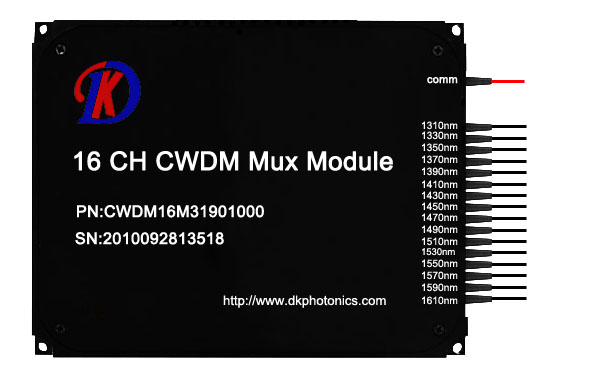
16CH CWDM
16CH CWDM

Also known as a mux, the fiber-optic multiplexer saves time and cost by squeezing more information through the optical network pathway. It is possible to split signals by varying the schedule or period of each transmission. Time Division Multiplexing (TDM) combines multiple signals by rapidly alternating between them so that only one is transmitting at any given time. Statistical Time Division Multiplexing (STDM) assigns each signal a specific time slot in order to optimize bandwidth usage. Further techniques include divisions of wavelength and frequency.

Wavelength Division Multiplexing (WDM) utilizes the total available pass band of an optical fiber. It assigns individual information streams different wavelengths, or portions of the electromagnetic spectrum. Similarly, Frequency Division Multiplexing (FDM) assigns each signal a different frequency. Carrier frequencies contain the signal while unused guard frequencies provide buffering to reduce interference. This helps minimize audible and visual noise and preserves the integrity of the original signal throughout the network.

Fiber-optic multiplexer technology serves single-mode and multimode optical fibers with multichannel rack mount or standalone units. This makes mixing channels with different configurations possible for a range of interface combinations. These devices provide stronger, more reliable transmissions in areas that have a lot of electromagnetic, radio frequency, or lightning interference.

As technology improves and information needs grow to fill the capacities of existing networks, equipment such as the fiber-optic multiplexer lessens the need to upgrade the fiber-optic infrastructure itself. Multiplexers permit new configurations of transmission protocols by increasing the amount of wavelengths or frequencies of light signals. By upgrading repeaters and terminal equipment, existing network transmission capacity can expand with demand.

Used by cellular carriers, Internet service providers, public utilities, and businesses, fiber-optic multiplexer technology extends the reach and power of telecommunications technologies. Network management systems allow for system service and maintenance, and provide for security, fault management, and system configuration. With advantages like lower costs and longer life expectancies, current fiber-optical networks are aided by improvements in multiplexing technology, and may provide light speed data transmission well into the future.

DK Photonicswww.dkphotonics.com  specializes in designing and manufacturing of high quality optical passive components mainly for telecommunication, fiber sensor and fiber laser applications,such as PLC Splitter, WDM, FWDM, CWDM, DWDM, OADM,Optical Circulator, Isolator, PM Circulator, PM Isolator, Fused Coupler, Fused WDM, Collimator, Optical Switch and Polarization Maintaining Components, Pump Combiner, High power isolator, Patch Cord and all kinds of connectors.
 

Free Space Optics Global Market Forecast –DK Photonics

According to ElectroniCast, the worldwide value of FSO link devices in stationary non-military/aerospace applications was $33.49 million in 2013…

Aptos, CA (USA) – January 24, 2014 —ElectroniCast Consultants, a leading market research consultancy, today announced the release of a report presenting their market analysis and forecast of Free Space Optics (FSO) communication links used in non-military/aerospace applications.

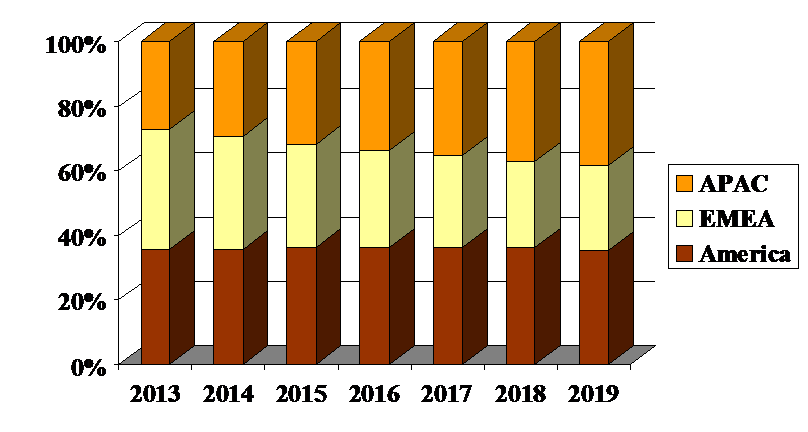
The global consumption of fixed-location (stationary) Transmitter/Receiver (T/R) links (pairs) used in non-military/ aerospace Free Space Optic system equipment was $33.49 million in 2013, up 11 percent from $29.83 million in 2012.  Free Space Optic (FSO) Transmitters and Receivers (pairs) used in link equipment with a range capability of less than 500 meters or less led in relative market share in 2013 with a global consumption value of $23.06 million.

According to the Free Space Optics Global Market Forecast & Analysis (January 2014), FSO is a line-of-sight (LOS) technology that uses directed laser beams, which provide optical bandwidth Transmitters and Receivers to link voice, video, and data intelligent transfer.  A single FSO link product (from point A to point B) often may incorporate multiple transmitters along with receiver/s to ensure adequate performance, in case of interference.

Free Space Optic communication links can be installed along railroad/subway tracks, tunnels, airport terminals, parking lot/structures or other major un-obstructed right-of-way (ROW); outdoors on building rooftops (building-to-building and/or campus), exterior walls, towers, indoors (aimed out a window), or any combination; however, a direct line-of-sight and appropriate distance are required to enable a Transmitter/Receiver Link between two points (point-to-point).

FSO-based products accommodate Ethernet-based protocols, SONET/SDH, ATM, FDDI and other standard and proprietary protocols. Products can be used for metropolitan (Metro) network extension; DWDM services, access/last mile, wireless backhaul, disaster recovery (testing and communications), storage area networks (SANs) and LAN/first mile/FTTx, and an almost endless list of other solutions.

The increase in the consumption of FSO links in the America region will be attributed to not only continued upgrades and network facilitation in the United States and Canada, but partly from the accelerating economic growth of major cities in Latin America.  Other market dynamics in the American region are increases in communication links needed for growing infrastructures, such as mass transit, security systems, broadcast and telecommunications.

European inner-city urban areas typically are difficult for wire-lines, including optical fiber cable installations; therefore, this fact promotes FSO or other wireless solutions.  The APAC region has advanced communication technology deployed especially in Japan; however, other countries, such as Australia, China and India, are not as advanced in campus-wide and metropolitan optical communication deployment.

The APAC region has rapidly expanding market opportunities and therefore, our forecast shows the region with the fastest growth (2013-2019), with the region taking over the leadership position later on in the forecast period.

According to ElectroniCast, the APAC region is forecast to eventually take the lead in terms of relative market share of non-military/aerospace FSO-Links…

Non-Military/Aerospace

FSO Global Consumption Value Market Share (%), By Region

FSO Global Consumption Value Market Share

Source: ElectroniCast Consultants

DK Photonics – www.dkphotonics.com  specializes in designing and manufacturing of high quality optical passive components mainly for telecommunication, fiber sensor and fiber laser applications,such as PLC Splitter, WDM, FWDM, CWDM, DWDM, OADM,Optical Circulator, Isolator, PM Circulator, PM Isolator, Fused Coupler, Fused WDM, Collimator, Optical Switch and Polarization Maintaining Components, Pump Combiner, High power isolator, Patch Cord and all kinds of connectors.

Fiber Optic Sensors Global Market Forecast- DK Photonics

According to ElectroniCast, the combined use of Continuous Distributed and Point fiber optics sensors will reach $4.33 Billion in 2018…

Aptos, CA (USA) – February 14, 2014 —ElectroniCast Consultants, a leading market/technology forecast consultancy, today announced the release of their market forecast and analysis of the global consumption Fiber Optic Point Sensors and Continuous Distributed Fiber Optics Sensor systems.

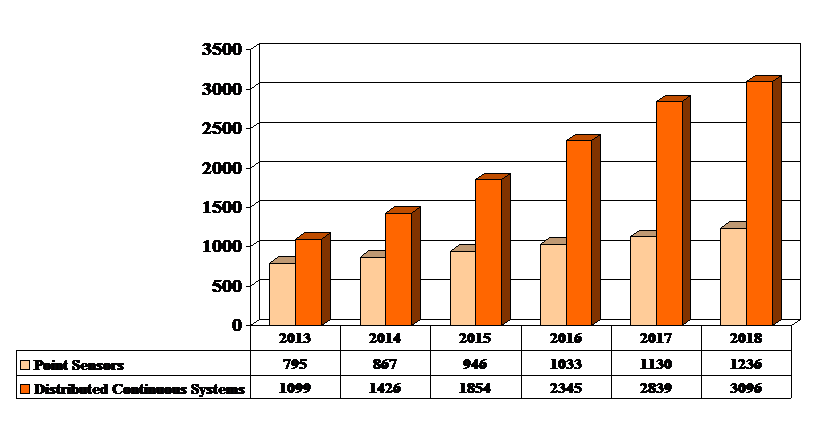
According to ElectroniCast, the consumption value is forecast to increase at an impressive 18% per year from $1.89 billion in 2013 to $4.33 billion in 2018.  Market forecast data refers to consumption for a particular calendar year; therefore, this data is not cumulative data.

Continuous Distributed fiber optic sensor systems involve the optic fiber with the sensors embedded with the fiber.  ElectroniCast counts each Point fiber optic sensor as one unit; however, the volume of Distributed Continuous fiber optic sensors is based on a complete optical fiber line and associated other components, which are defined as a system.

The use of Distributed Continuous fiber optic sensors in the Military/Aerospace/Security application category maintains the lead in 2014, followed by the Petrochemical/ Energy sector.  The Civil Engineering/Construction sector, which includes continuous fiber sensors used in Structural Health Monitoring (SHM) as well as other concerns in buildings, bridges, tunnels, towers, and other structures, is also forecast for strong growth.  Inspection and quality control frequently constitute the largest portion of production costs for many industries.

“There is a growing need for improved measurement solutions, which offer higher precision, speed and accuracy and provide better in-process measurement of moving objects, resulting in lower costs for better products.  Relatively speaking, the Manufacturing/ Factory segment tends to favor point sensors instead of distributed fiber systems,” stated Stephen Montgomery, Director of the Fiber Optics Components group at ElectroniCast Consultants.

“The Biomedical/ Science sector is a relatively minor user of Distributed Continuous fiber optic sensors, in terms of consumption value, since the length of optical fiber is (very) short versus the other applications; therefore the average selling prices for the distributed continuous fiber optic sensor systems are low compared to the larger (longer length of optical fiber) distributed continuous fiber optic sensor systems used in other applications. The consumption value of Distributed Continuous fiber optic sensor systems is forecast to grow at 23% per year from $1.099 billion in 2013 to $3.096 billion in the year 2018,” Montgomery added.

DATA FIGURE

According to ElectroniCast, the consumption value of fiber optic sensors (continuous distributed systems + Point-types) will increase from $1.89 billion in 2013 to $4.33 billion in 2018.

Fiber Optic Sensor Global Consumption Market Forecast

Point vs. Distributed Continuous
(Value Basis, $Million
)

Fiber Optic Sensor Global Consumption Market Forecast


Note: Market forecast data refers to consumption for a particular calendar year; therefore, this data is not cumulative data.

DK Photonicswww.dkphotonics.com  specializes in designing and manufacturing of high quality optical passive components mainly for telecommunication, fiber sensor and fiber laser applications,such as PLC Splitter, WDM, FWDM, CWDM, DWDM, OADM,Optical Circulator, Isolator, PM Circulator, PM Isolator, Fused Coupler, Fused WDM, Collimator, Optical Switch and Polarization Maintaining Components, Pump Combiner, High power isolator, Patch Cord and all kinds of connectors.

Fiber Media Converters in Private Datacom Market Forecast (March 2014)

Fiber Media Converters in Private DatacomMarket Forecast (March 2014)

According to ElectroniCast, the global use of fiber media converters in private datacom networks is expected to reach $1.29 billion in 2014…

Aptos, CA (USA) – March 20, 2014 —ElectroniCast Consultants, a leader in fiber optic market research, announced the release of a new market analysis of the worldwide use of fiber optic / Fiber media converters in private data communications.  A fiber media converter is a networking device that makes it possible to connect two dissimilar media types such as copper with fiber optic cabling, as well as (different) fiber-to-fiber (F2F), such as multimode to single mode optical fiber.

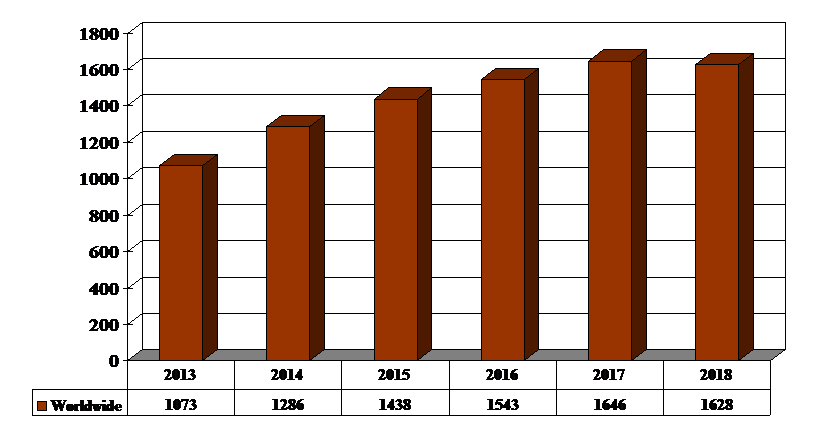
The worldwide value for selected fiber media converters used in private datacom networks reached $1.07 billion in 2013. The consumption value is forecast increase with strongly rising quantity growth partially offset by declining average prices.

The EMEA and the APAC regions are forecast for double-digit consumption value growth during the timeline covered in this study (2013-2018); however, the American region’s growth is forecast to “flatten” and eventually turn to negative.  The worldwide use of private datacom fiber media converters, which are specified in the ElectroniCast market study, is forecast to peak at $1.646 billion in 2017, before slipping to $1.628 billion in 2018.

“The fiber media converters researched in this market study are typically used within an existing Private Enterprise Data Centers (DCs) and Local Area Networks (LANs), as well as other non-public data communication links. They are often used to connect newer 100-Mbps, Gigabit Ethernet, 10G, or other equipment in existing networks, which are generally (copper-based) 10BASE-T, 100BASE-T, or a mixture of both,” stated Stephen Montgomery, Director of the Fiber Optics Components group at ElectroniCast Consultants.

“Several factors make the conversion from copper to optical fiber a good choice, such as – longer link lengths in campuses and industrial plants; resistance to electromagnetic and radio-frequency interference (EMI/RFI) may be necessary; and wider bandwidth capability, just to point-out a few examples,” Montgomery added.

The strong user demand for greater bandwidth and increased interconnectivity to the desktop, throughout the buildings, campuses, from LAN-to-LAN (Metropolitan Area Network – MAN) continues in 2014.

This is matched by rapidly growing demand for global broadband interconnectivity. Interactive multimedia terminals, triple play (voice, video and data), quadruple-play (adding mobility as a communications function to the network), and numerous other dynamics/ applications, continuing bring rapid access to massive databases, which increase productivity while providing rapid ROI (return on investment).

Such expanded capability, however, must often be obtained without making the current network elements obsolete. Local area network (LAN) applications illustrate this trend.  LANs are becoming larger and more complex. Reconfiguration, relocation, and extension of LANs are occurring more frequently, due to organization restructuring, advances in computer usage, and the trend toward decentralized computing.

These changes to LAN cabling represent a major ongoing operational expense and a disruption of work for many companies (enterprises). For example, adding capabilities often requires that network administrators upgrade their existing LANs to another media type: for example, copper-to-fiber, multimode-to-singlemode fiber, or even singlemode –to- different types of singlemode optical fiber (note: copper-to-copper conversion is not covered in the study). By using media converters, the network administrator can achieve these upgrades inexpensively.

According to ElectroniCast, the global use of fiber media converters in private datacom reached $1.07 billion in 2013 and is forecast to peak at $1.646 billion in 2017, before slipping to $1.628 billion in 2018.  


Private Datacom Fiber Media Converter Global Market Forecast,
(Value Basis, $ Million) – Source: ElectroniCast Consultants

Fiber Media Converter
Private Datacom Fiber Media Converter Global Market Forecast,

Note: Market forecast data in this study report refers to consumption (use) for a particular calendar year; therefore, this data is not cumulative data.

DK Photonicswww.dkphotonics.com  specializes in designing and manufacturing of high quality optical passive components mainly for telecommunication, fiber sensor and fiber laser applications,such as PLC Splitter, WDM, FWDM, CWDM, DWDM, OADM,Optical Circulator, Isolator, PM Circulator, PM Isolator, Fused Coupler, Fused WDM, Collimator, Optical Switch and Polarization Maintaining Components, Pump Combiner, High power isolator, Patch Cord and all kinds of connectors.

Where can WDM-PON go next? — DK Photonics

Where can WDM-PON go next?

The current generation of commercial WDM-PON/ 100GHz DWDM systems based on reflective ONU technology is optimized for applications up to 20 km, 40 channels, and 1 Gbps per customer. Current research focuses on how to scale WDM-PON toward higher bit rates and longer reach. Forward error correction is a key technology for scaling the current generation of WDM-PON technology to higher bit rates, longer reach, tighter channel spacing, or a combination thereof. An important challenge is to package the technology in an MSA form-factor pluggable module to maintain its benefits in cost and compatibility with third-party equipment.
A typical requirement for next generation metro/access systems is to enable node consolidation. That means operators can reduce opex by closing down portions of their central offices; at the same time, this goal requires the optical signals to bridge longer distances than what is typical of the access networks of today. Thus, when routing WDM-PON / 1064nm high power isolator signals through the metro part of the network, it becomes necessary to support ring architectures as an alternative to the basic tree structure.
In a ring structure, cascaded filters may decrease the effective channel passband. Since the spectral width of the WDM-PON signal is wider than the signals from a normal DFB source, such filtering effects may affect transmission.
In a recent evaluation project, a partnership between Transmode and Deutsche Telekom Hochschule für Telekommunikation of Leipzig, Germany, achieved 140-km long reach WDM-PON transmission over a ring-based access-network architecture. The partnership investigated the effects of using WDM-PON based on ASE-seeded wavelength-locked transmitters in a ring-based network architecture with cascaded CWDM OADM nodes. Transmission at 1.25 Gbps over 140-km singlemode fiber was demonstrated using an EDFA and dispersion compensation.
The results were first published at ECOC 2013 (In de Betou, Bunge, Åhlfeldt, and Olson, “140km Long-reach WDM-PON Test for Ring-based Access Network Architecture”). This partnership has investigated what opportunities could be provided by WDM-PON technology in such network topologies by studying experimentally the influence of narrow filtering and maximum reach.
The experimental testbed (in Leipzig) was built around Transmode’s TM-Series iWDM-PON system to create an optical line terminal (OLT) (see Figure 2). The OLT has a transponder line card that hosts pluggable wavelength-locked Fabry-Perot transceivers, ASE seed light sources, dual circulators for up- and downstream, and a 40-channel multiplexer based on an AWG.
To reach distances beyond 100 km, amplifiers dispersion compensation, and remote ASE seed sources were used. While an experimental field trial today, it shows that WDM-PON may well continue to evolve to support longer reach and more sophisticated network architectures in the future supporting a broader range of deployment scenarios.
DK Photonics – www.dkphotonics.com specializes in designing and manufacturing of high quality optical passive components mainly for telecommunication, fiber sensor and fiber laser applications,such as High Power Isolator,1064nm Components,PM Components,Pump Combiner,Pump Laser Protector,which using for fiber laser applications.Also have Mini-size CWDM, Optical Circulator, PM Circulator,PM Isolator, Fused Coupler,Mini Size Fused WDM.More information,please contact us.