
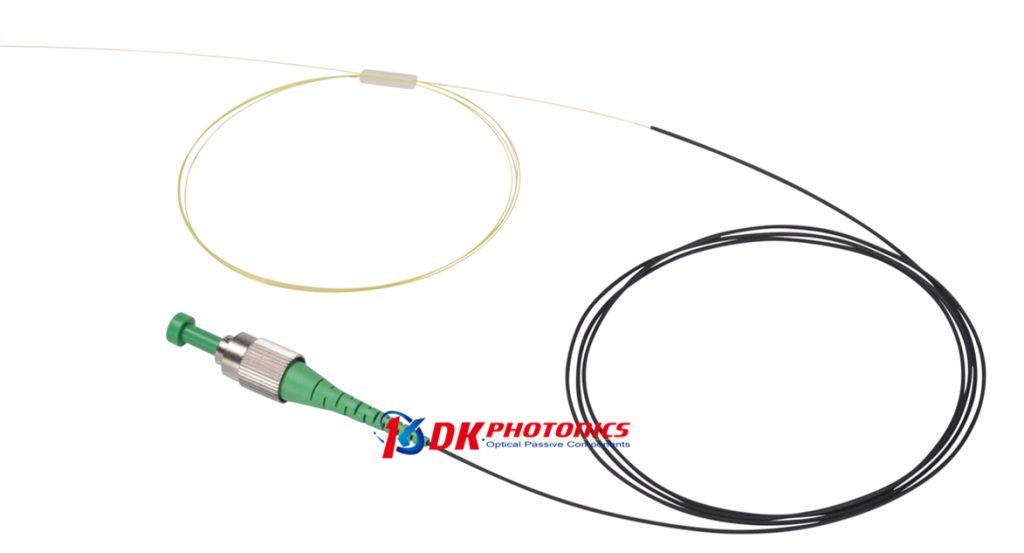
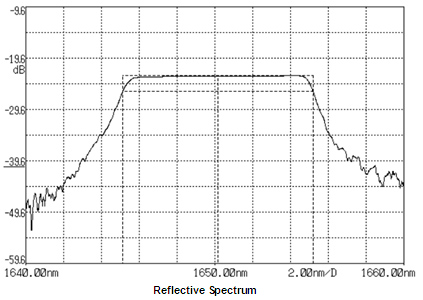
Chirped gratings are structures where the optical period of the index modulation varies along the grating length. DK Photonics manufactures the chirped grating by using chirped phase mask. By modifying the intensity of grating depth for reaching any predefined gain compensation profile that creates the gain flat filter. With ultra wide bandwidth that also create wide band filter as well as serving the distributed sensing.
Chirped gratings are structures where the optical period of the index modulation varies along the grating length. DK Photonics manufactures the chirped grating by using chirped phase mask. By modifying the intensity of grating depth for reaching any predefined gain compensation profile that creates the gain flat filter. With ultra wide bandwidth that also create wide band filter as well as serving the distributed sensing.
| PARAMETERS | VALUES |
| Center Wavelength(nm) | 1550nm & 1650nm |
| Reflectivity (%) | 10~99 |
| FWHM(nm) | 10 (typical) |
| Insertion Loss(dB) | <0.5 |
| Fiber Termination | Bare Fiber, FC/UPC Or FC/APC |
| Fiber Type | SMF-28 Or Compatible |
A chirped fiber Bragg grating (chirped FBG) is a grating structure in which the optical period of the refractive index modulation changes along the length of the grating. This varying grating period enables the device to provide specialized optical filtering characteristics. DK Photonics manufactures chirped fiber Bragg gratings using a chirped phase mask to achieve the required grating profile.
A chirped Bragg grating works by varying the optical period of the index modulation throughout the grating length instead of maintaining a constant period. At DK Photonics, the chirped grating is produced using a chirped phase mask, while the grating depth intensity is modified to achieve a predefined gain compensation profile. This design enables the grating to function as a gain flat filter, wideband filter, and distributed sensing component.
A chirped grating offers several advantages based on its variable grating period, including:
These characteristics make chirped fiber Bragg gratings suitable for optical filtering applications requiring broad bandwidth and customized reflection performance.
DK Photonics manufactures chirped fiber Bragg gratings with the following typical specifications:
These specifications allow users to select a chirped FBG that matches their optical system requirements.
DK Photonics manufactures a chirped fiber grating using a chirped phase mask. During the manufacturing process, the intensity of the grating depth is adjusted to create a predefined gain compensation profile. This controlled fabrication process enables the resulting chirped fiber Bragg grating reflector to achieve the desired optical filtering performance.
The chirped fiber Bragg grating reflector from DK Photonics is available with reflectivity values ranging from 10% to 99%. This broad reflectivity range allows the grating to be selected according to the required optical reflection characteristics for different filtering and sensing applications.
Yes. According to the product specifications, chirped FBGs provide an ultra-wide bandwidth that enables them to operate as wideband filters. The same design also allows them to serve distributed sensing applications, making a single chirped grating suitable for multiple optical functions.
DK Photonics chirped FBGs are designed for SMF-28 or compatible optical fibers. Available fiber termination options include:
These connector choices make integration easier across different fiber optic systems.
A chirped fiber Bragg grating is suitable for users who require optical components capable of:
These features help users select a grating that aligns with their optical filtering and sensing requirements.
No. Although terms such as chirped FBG pulse compression, mode-locked fiber laser, saturable absorber, circulator, Mamyshev oscillator, dispersion emulator, and related patent keywords are associated with the broader field of chirped fiber Bragg gratings, the provided product content only describes the chirped grating structure, manufacturing method, gain compensation profile, wideband filtering capability, distributed sensing, and technical specifications. No additional application or patent details are provided in the supplied content.
When you inquire, please provide detailed description for your requirement.
If you need to customize other specifications, please provide detailed description for your requirement.
 DownloadDatasheet in PDF